
























Am 18. Kriegstag beteuert US-Präsident Trump, dass die Operationen im Iran "sehr gut" laufen, obwohl die Ölpreise weltweit durch iranische Angriffe und Unterbrechungen des Schiffsverkehrs in der strategischen Straße von Hormus in die Höhe geschnellt sind.
Israels Militär hat in einem Social Media Post auf X angekündigt, dass es den Anführer der paramilitärischen Freiwilligentruppe Basidsch bei einem "präzisen Angriff in Teheran" getötet habe. Sollte sich sein Tod bestätigen, wäre er der ranghöchste iranische Amtsträger, der nach dem Obersten Führer Ajatollah Ali Chamenei getötet wurde.
 WERBUNG
WERBUNG
WERBUNG
In der Zwischenzeit hat die israelische Armee nach eigenen Angaben in den frühen Morgenstunden des Dienstag umfangreiche Angriffe auf verschiedene Ziele im Iran und auf die im Libanon ansässige Hisbollah durchgeführt.
Der iranische Fußballverband bemüht sich derweil darum, die Vorrundenspiele des Iran bei der anstehenden Weltmeisterschaft in Nordamerika nach Mexiko zu verlegen. Laut Plan würden die ersten drei Spiele der Islamischen Republik in Los Angeles, Seattle und Tuscon in Arizona stattfinden.
Inwieweit der Weltfußballverband zu derartigen Änderungen bereit ist, bleibt vorerst unklar. Eine Anfrage der Nachrichtenagentur AFP blieb zunächst unbeantwortet.
Zuvor hatte US-Präsident Donald Trump erklärt, dass die Sicherheit der iranischen Nationalmannschaft bei der diesjährigen Fußballweltmeisterschaft nicht garantiert werden könnte. Der Präsident des iranischen Fußballverbandes, Mehdi Tadsch, verkündete daraufhin, dass seine Mannschaft "mit Sicherheit nicht in den USA spielen" werde.
Verfolgen Sie unseren englischen Live-Blog mit den neuesten Informationen von unseren Journalisten in der Region und weltweit.

 ${title}
Iran’s powerful national security chief – Here is what we know about Ali Larijani
Ali Larijani, 67, served as secretary of the Supreme National Security Council and is considered one of the most prominent figures in Iran's political and security apparatus.
Although he could not have succeeded Ali Khamenei and holds no position in the interim leadership council, his current status makes him one of top targets for elimination due to the immense power he wields.
Larijani is widely seen as part of the close circle surrounding the new supreme leader, Mojtaba Khamenei, alongside judiciary chief Gholam-Hossein Mohseni-Ejei and parliament speaker Mohammad Bagher Ghalibaf.
Read the full article:
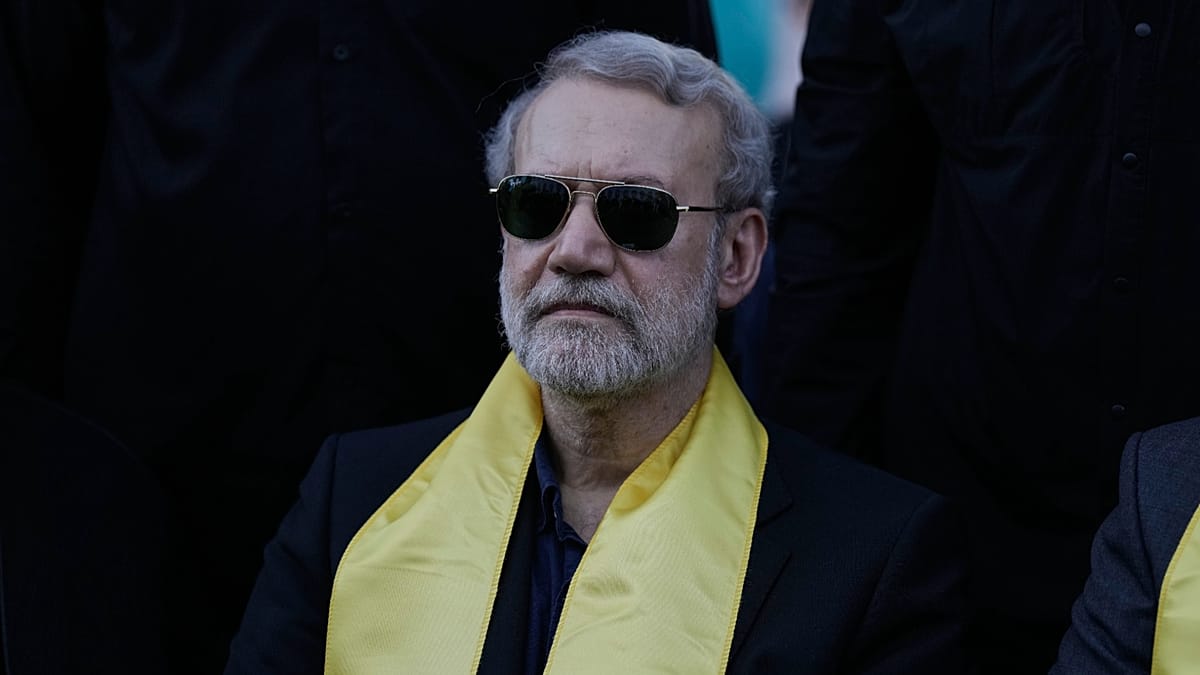
What we know about Ali Larijani, Tehran’s most influential powerbroker
Although Ali Larijani could not have succeeded Ali Khamenei and holds no position in the interim leadership council, his current status makes him one of top ta…
Israel says top Iranian security official Ali Larijani killed in Tehran strike
Israel’s Defence Minister Israel Katz says the IDF killed Iran’s top security official Ali Larijani in a strike on Tehran overnight into Tuesday.
The confirmation came after speculation of Larijani’s elimination within the Israeli media landscape, following an earlier announcement by the military that it had killed Basij paramilitary chief Gholamreza Soleimani.
Larijani is the second most senior Iranian official to get assassinated since the country’s former Supreme Leader Ayatollah Ali Khamenei, who was killed in the war’s opening salvo on 28 February.
Iranian officials have not yet commented on the strikes.
Bahrain says more drone attacks from Iran
Manama has reported on Tuesday that it has been targeted by more drone attacks from Iran.
The country's Defence Ministry shared on Tuesday its latest tally of 129 missiles and 233 drones were fired towards the county since the start of the war on 28 February, representing an increase of nine drone attacks in comparison with Monday’s figures.
Israeli airstrike wounds 5 Lebanese soldiers in southern Lebanon
Lebanon's army said five of its soldiers were injured after Tuesday morning’s Israeli assault on the village of Kfar Sir.
Two of the five soldiers were in critical condition.
The army said the troops were wounded while travelling in a car and a motorcycle, adding that they were all taken to hospital for treatment.
IDF says it has killed the head of Iran's Basij paramilitary unit
Israel’s military announced in a post on X on Tuesday that its airstrikes on Iran the day prior had successfully “eliminated” Gholamreza Soleimani, the powerful chief of the Basij paramilitary unit, a volunteer-based force operating as an auxiliary unit of the Revolutionary Guard Corps (IRGC).
“Yesterday, the IDF targeted & eliminated Gholamreza Soleimani, who operated as commander of the Basij unit for the past 6 years,” said the IDF.
“Under Soleimani, the Basij unit led the main repression operations in Iran, employing severe violence, widespread arrests, and the use of force against civilian demonstrators.”
🔴 COMMANDER OF THE BASIJ UNIT ELIMINATED
— Israel Defense Forces (@IDF) March 17, 2026
Yesterday, the IDF targeted & eliminated Gholamreza Soleimani, who operated as commander of the Basij unit for the past 6 years.
Under Soleimani, the Basij unit led the main repression operations in Iran, employing severe violence,… pic.twitter.com/aJ0dNtCFz0
Iran’s top security official among targets in Monday attacks, Israeli media reports
Israeli media outlets say Iran’s national security chief Ali Larijani was among those targeted in its aerial campaign on Tehran on Monday.
Larijani, known for being an unwavering hardline stance, has called for intensifying attacks on Israel and vowed to avenge the killing of Iran’s former Supreme Leader Ali Khamenei in the war’s opening salvo on 28 February.
Israeli media outlets say Larijani has long been a target for the country’s defence forces, who together with the US have eliminated several high-ranking Iranian political figures since the start of the war.
It is not yet clear if the strikes on the Iranian official were successful.
Tehran and Baghdad discussing passage of oil tankers through chokepoint Hormuz Strait
Iranian and Iraqi officials are holding talks about allowing transit of Iraq’s oil tankers through the Strait of Hormuz, according to Iraqi Oil Minister Hayan Abdul-Ghani.
The comments were broadcast by the country’s state-run Iraq News Agency.
The war and the virtual closure of the strait have severely impacted Iraq, who depends overwhelmingly on oil for its economic wellbeing.
The news agency said Iraq’s oil production has been reduced to 1.2 million barrels a day, down from almost four times as much prior to the war, when the country was producing approximately 4.3 million barrels daily.
Beijing says it is ‘in communication’ with Washington over Trump visit
China is maintaining contact with the US about issues including a planned visit by President Donald Trump, a Chinese Foreign Ministry spokesperson said on Tuesday.
“China and the US are in communication on issues including the timing of President Trump’s visit to China,” Lin Jian said in Beijing at a press briefing.
Trump on Monday said that he may delay his heavily anticipated trip because of the war in Iran, which was scheduled for late March to early April.
Lin added that US officials clarified “the visit is unrelated to the issue of navigation in the Strait of Hormuz.”
Trump told the Financial Times that he would like to know before leaving for Beijing whether China would help secure the strait, which he says is responsible for 90% of their oil supply, as it remains effectively closed amid Tehran’s attacks on commercial vessels in the waterway.
A US trade official walked back the statement on Monday, saying a postponement would be unrelated to China’s help in the strait.
Israel says it struck military targets in three Iranian cities
The Israeli military says it has conducted a “combined wave of strikes” against infrastructure and military targets in the Iranian cities of Tehran, Shiraz and Tabriz on Tuesday.
The IDF detailed in a post on X that the strikes in Tehran hit command centres, launch sites and air defence systems.
In Shiraz, southwest of Iran, the internal security forces’ command centre and a ballistic missile site were hit, while additional air defence systems were “dismantled” in the northwestern city of Tabriz.
🎯STRUCK: Iranian regime infrastructure in different areas across Iran:
— Israel Defense Forces (@IDF) March 17, 2026
📍In Tehran, dozens of munitions were dropped on command centers and UAV, ballistic missiles and air defense storage sites were stuck.
📍In Shiraz, the internal security forces’ command center and a… pic.twitter.com/8RX2NS4tnH
Seoul says 26 vessels stuck near Strait of Hormuz
South Korea says 26 of its vessels and 183 crewmembers remain stranded in waters around the Strait of Hormuz as the vital waterway remains effectively closed amid the war in Iran, currently in its 18th day.
Park Il, spokesperson of South Korea’s Foreign Ministry, said on Tuesday that officials are in close contact with port authorities in nearby countries to facilitate the provision of food and other supplies.
Park said they plan to take unspecified additional steps if the situation worsens.
Seoul has been cautious about discussing support for Washington efforts to reopen the Strait of Hormuz after US President Donald Trump urged several governments, including Seoul, to deploy naval assets.
“The government will maintain close communication with the US side and conduct a close and careful review of the issue, taking into account various factors and the changing regional situation,” said Park.
Trump must ‘withdraw US forces’ if he wants passage through Hormuz, says Iranian ambassador
Ali Mojtaba Rouzbehani, Iran’s ambassador in Turkmenistan, says his country will defend the Strait of Hormuz and called on US forces to withdraw to restore stability.
“I have a proposal for Trump: if he wants stability and passage through the Strait of Hormuz, he must ensure that his military forces withdraw from the strait,” said Rouzbehani on Monday.
“The Strait of Hormuz is not currently closed. But as a result of this aggression, no ships can pass through the strait, and we will defend its stability and security,” he said.
The ambassador added that US and Israeli forces “have other targets in the region.”
“They’ve targeted water treatment plants, fuel storage facilities, and other facilities. These ongoing threats must end,” he said.
Strait of Hormuz cannot be ‘as it was before’, says Iran’s parliament speaker
The speaker of Iran’s parliament, Mohammad Bagher Ghalibaf, told Iranian state television that the Strait of Hormuz cannot be “as it was before” as Tehran’s fire keeps nearly all traffic out of the strategic waterway, through which a fifth of the world’s oil and gas normally pass.
The senior Iranian lawmaker made the comment in an interview which aired on Tuesday as Iranian fire continues to target shipping in the region.
“They are flying, launching missiles, should we just sit back and do nothing in response, or not? Naturally, it is our undeniable right. We must do this,” he said.
“Let me speak clearly, the Strait of Hormuz has always been important, one of the world’s key strategic chokepoints,” said Ghalibaf.
“But look at this strategic mistake by the Americans and the Zionist regime, this trap they set, and the recklessness they showed, has turned this potential into an active reality. This is a high-risk opportunity.”
Australia and New Zealand call for war to end ‘as quickly as possible’
Canberra and Wellington have called for the Iran war, which started when the United States and Israel launched attacks on 28 February, should end as quickly as possible.
Australian and New Zealand foreign and defence ministers met for annual talks on Tuesday in Australia’s capital Canberra.
“We discussed the escalating situation in the Middle East. We want this crisis to end as quickly possible and move to a negotiated solution,” said Winston Peters, New Zealand’s Foreign Minister, at a joint press conference after the meeting.
The Minister met with Australia’s Penny Wong today ahead of the third Australia - New Zealand Ministerial Consultations to discuss the strong trans-Tasman relationship, cooperating even closer in the Pacific and working together on global issues, including in the Middle East.… pic.twitter.com/3pxNGpx468
— Winston Peters (@NewZealandMFA) March 17, 2026
Kuwait arrests 16 people over links to Iran-backed Hezbollah
Kuwaiti security forces arrested 16 individuals suspected to have links with Iran’s Lebanon-based proxy Hezbollah, according to a report by the state-run Kuwait News Agency.
The interior ministry said in a statement late on Monday that the 14 Kuwaiti and two Lebanese suspects arrested in the raid sought to “create chaos, and disrupt public order” during the war.
The ministry did not identify the people arrested and it was not immediately clear if they had attorney representation yet.
The ministry shared that authorities found firearms, ammunition, weapons for training and assassinations, encrypted communication devices and drones. It added that the suspects aimed to recruit others in the country to join Hezbollah.
Kuwait has for years experienced attacks which authorities have produced links to Iran in.
Pakistani man killed in UAE missile attack, officials say
A Pakistani man was killed on Tuesday morning in a missile attack on the United Arab Emirates capital Abu Dhabi, according to authorities.
The Abu Dhabi Media Office said in a post on X that the man was killed when shrapnel fell in the Baniyas area after the country’s air defences intercepted a ballistic missile.
The death toll in the UAE since the start of the war now rises to eight people including two soldiers, according to authorities.
Abu Dhabi authorities have responded to an incident involving falling debris in the Baniyas area, following the interception of a ballistic missile by air defence systems. The incident resulted in the death of a Pakistani national.
— مكتب أبوظبي الإعلامي (@ADMediaOffice) March 17, 2026
The public is advised to obtain information…
Saudi Arabia intercepts a dozen drones
Saudi Arabia’s Defence Ministry says it has intercepted a dozen drones fired from Iran on Tuesday morning over the country’s vast Eastern Province, home to oil infrastructure.
Fire breaks out in Qatar following missile attack, interior ministry says
A fire broke out in an industrial area on Tuesday morning in Qatar after a missile was intercepted over the gas-rich country, the interior ministry said.
Explosions heard in Doha, alerts in Dubai
Residents of Qatar reported hearing explosions as air defences near the capital, Doha, worked to intercept incoming Iranian fire on Tuesday morning.
Qatar’s Defence Ministry said it intercepted a missile attack on the country a short time later.
In the United Arab Emirates, Dubai residents received a missile alert roughly around the same time.
UAE reports early wave of attacks from Tehran prompting temporary closure of airspace
Explosions sounded over Dubai early on Tuesday as the United Arab Emirates’ military worked to intercept incoming Iranian fire that caused the country to briefly close its airspace.
The closure was soon lifted, according to the state-run WAM news agency, which quoted the UAE’s General Civil Aviation Authority as saying.
Authorities said “the situation stabilised,” allowing flights to resume. Shortly after, missile warning alerts were sent to residents of Dubai. The sound of explosions could be heard in city as the military worked to intercept the incoming fire.
Read the full article:
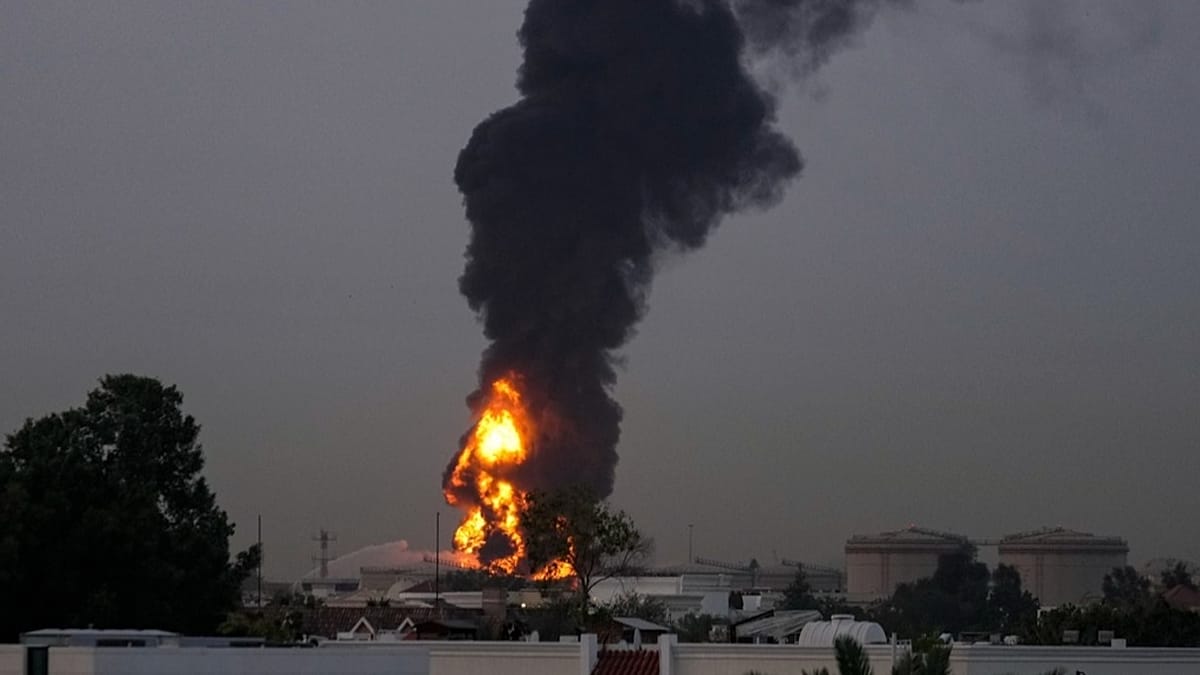
Israel announces new strikes across Iran, expanded attacks in Lebanon
Early attacks were traded as the US and Israeli war on Iran pushed through into day 18. The UAE reported that its air defences were working to intercept Irania…