




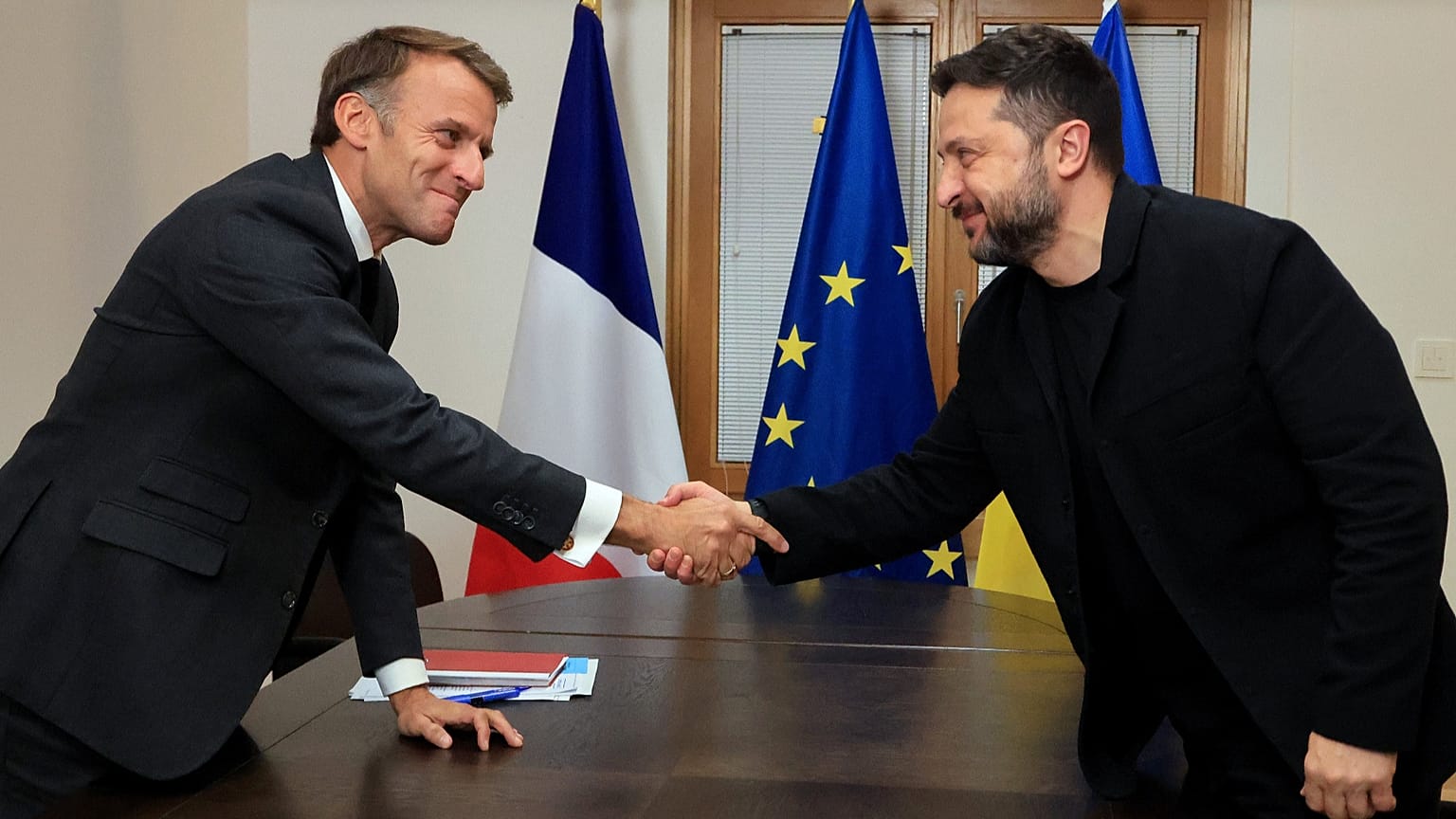












Am Freitag stehen die wachsenden Spannungen zwischen Selenskyj und Trump im Fokus, wenn der ukrainische Präsident zum zweiten Tag des EU-Gipfels stößt.
Die Staats- und Regierungschefs der Europäischen Union stellen sich hinter den ukrainischen Präsidenten Wolodymyr Selenskyj. Er nimmt am zweiten Tag des Gipfels in Brüssel teil. Hintergrund ist ein heftiger Streit mit US-Präsident Donald Trump. Sein Dieselgeschäft mit Russland hat das Bündnis erschüttert.
 WERBUNG
WERBUNG
WERBUNG
Trump fordert von der Ukraine, Angriffe auf russische Ölraffinerien zu beenden. Diese Angriffe macht er für gestiegene Spritpreise verantwortlich. Selenskyj widerspricht. Verantwortlich sei in Wahrheit Trumps Krieg gegen Iran, sagte er.
Die Angriffe auf Russlands Ölindustrie sollen ohne Pause weitergehen, kündigte Selenskyj an. Befürchtungen, Washington könne im Gegenzug Geheimdienstinformationen zurückhalten, wischte er zur Seite.
Viele EU-Staats- und Regierungschefs sehen die ukrainischen Angriffe mit großer Reichweite als wichtigstes Druckmittel Kyjiws gegenüber Moskau. Sie wollen eng mit Selenskyj zusammenrücken und eine geschlossene Front zeigen. Das transatlantische Bündnis erlebt erneut eine Krise des Zusammenhalts.
Alle weiteren Entwicklungen finden Sie in unserem Liveticker auf Englisch:

 ${title}
Dutch PM says the EU needs to reduce reliance on US tech
Europe must build its own capacity to provide Ukraine with critical connectivity services, the Dutch PM Rob Jetten said, after Starlink access was restored.
Speaking about discussions with the US and a conversation with French President Emmanuel Macron, the leader said Europeans should be able to provide more of these services themselves in the near future.
The Netherlands remains among the top five supporters of Ukraine, focusing on areas where it has particular strengths.
'A good deal is more important than just getting a stamp of approval,' Dutch PM says
Dutch Prime Minister Rob Jetten said the current budget proposal wasn't good enough and that "a good deal" on the EU's multi-annual budget is "more important than just getting a stamp of approval."
"It needs to be much more focused on key priorities—such as our security, our competitiveness and gaining better control over immigration. Furthermore, the burden-sharing is not fair," Jetten added.
Ukraine's attacks on Russian refineries a 'disgrace', Trump says
US President Donald Trump has doubled down on his criticism of Ukrainian President Volodymyr Zelenskyy and his strikes on Russia's oil refineries, calling them a "disgrace".
In an interview with Newsmax, a right-wing TV channel, Trump said Zelenskyy "is not a good guy for us to deal with" because "he doesn't want to settle" the war that Russia launched. "He says he wants to settle, but he doesn't. No, I'm not a big fan of Zelenskyy," Trump said.
Asked about Zelenskyy's intention to resume strikes against Russia's oil refineries, which have inflicted economic pain on Moscow, Trump reaffirmed his opposition.
"Now, if you tell me that Zelenskyy is again shooting at refineries, all he's doing is making the world oil price higher," he said. "Well, I think that's a disgrace. There's plenty of other targets."
"But when you shoot at diesel refineries where you make, you know, diesel oil and we need that, and the world needs that, then he's not doing a good service for the world."
Trump said Zelenskyy is "more difficult to deal with" than Russian President Vladimir Putin, with whom Trump recently struck a controversial deal to purchase Russian diesel that had until now been under sanctions. The deal sent US-Ukraine relations to a new low. Zelenskyy said he feels betrayed by Trump's actions.
Trump repeated his call for new elections in Ukraine, which are banned under martial law. "I think you need an election because there's nobody that's telling me that the people of Ukraine are satisfied having missiles hitting their apartment building," Trump said.
Leaders begin to arrive
EU leaders are slowly making their way into the second day of the summit. Dutch Prime Minister Rob Jetten is among the first ones to show up.
Stay tuned for updates.
Credit: European Union
Ukraine working on European alternatives to Starlink, top Zelenskyy aide says
As EU leaders begin the second day of their summit in Brussels, with Ukraine's defence needs high on the agenda, a senior Ukrainian official has told Euronews that work is already under way on European alternatives to US-made air defence systems and Starlink satellite communications.
Speaking exclusively to Euronews' Europe Today programme, Ihor Zhovkva, deputy head of President Volodymyr Zelenskyy's office, said the European FREYJA anti-ballistic missile programme had progressed to direct engagement between defence companies.
"We need a European equivalent of an air defence system," he said, adding that Ukraine intended to take a leading role in its development.
Kyiv is also pursuing a European alternative to Starlink, although Zhovkva declined to disclose further details.
Asked whether developing these systems would take too long, Zhovkva said progress would come considerably sooner than sceptics anticipated.
"We have a clear timetable and deadlines," he said. "It will be much faster than ten or fifteen years, and even faster than five."
Zhovkva also insisted that Europe must be involved in any negotiations to end the war, arguing that Ukraine's future security was inseparable from that of the wider continent.
Ukraine takes centre stage on Friday
The second day of the EU summit will have one key purpose: to show the world that Europe continues to be fully behind Ukraine's fight against Russia's full-scale invasion.
Of course, this isn't the first time that this has happened. In fact, it's a message that every EU summit has sent since February 2022. What changes now is the context: Ukrainian President Volodymyr Zelenskyy says he feels betrayed by the diesel supply deal that US President Donald Trump struck last Friday with his Russian counterpart, Vladimir Putin, in open defiance of Western sanctions.
Since then, relations between Zelenskyy and Trump have rapidly deteriorated. Trump has called for new elections in Ukraine, which are forbidden in wartime, while Zelenskyy insists the strikes on Russia's oil refineries, which Trump has asked him to stop, will resume.
What happened yesterday?
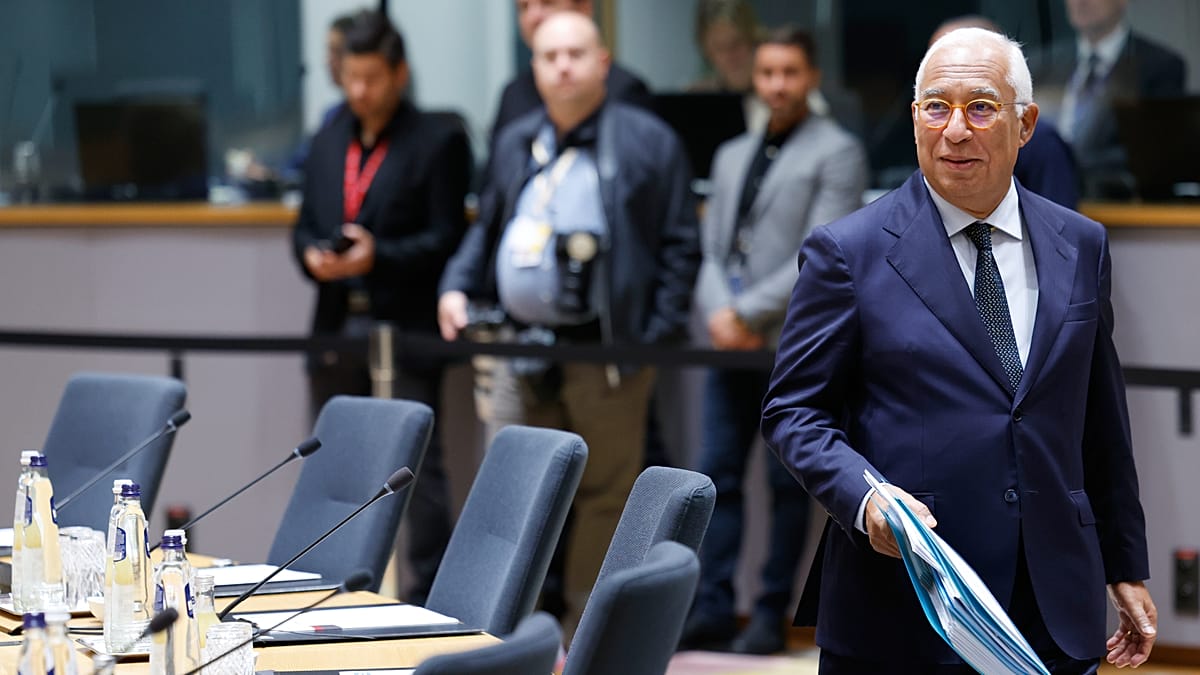
The first day of the EU summit was dominated by the fight over the next long-term budget. At the end of an inconclusive day of talks, António Costa, the president of the European Council, took charge of the negotiations. He has committed to present a new compromise with revised figures ahead of a special summit next month.
Inconclusive sparring at EU summit puts budget timeline into question
EU leaders stuck to their red lines on the next long-term budget at Thursday’s summit, with several now rejecting the presumed December deadline. Council Presi…